Reading Circle Pages

Search This Blog

Showing posts with label Steven Barnes. Show all posts

Friday, December 12, 2014

Online Screenwriting Workshop January 10-31, 2015 with Tananarive Due and Steven Barnes

Are you working on a screenplay or want to get started on you? Would you like input from industry professionals on your screenplay idea?
Are you an author who would like to learn to adapt your books to film?
Whether you’re a screenwriter, a novelist or a producer, there has never been a more exciting time to try to get your foot in the door in television and film. But it all begins on the page – with a terrific screenplay or teleplay.
After a successful fall workshop, authors and screenwriters Steven Barnes and Tananarive Due (WGA) are offering an online screenwriting workshop Jan. 10-31 to help you whip your project into shape. For the next 48 hours, you can register for the early-bird fee of only $250.  (Until midnight PST Friday, Dec. 12.) Then our Christmas rate is $300 until Dec. 24th.  Regular registration if $350–so save $100 by registering now. Space is limited.
Here’s what one of our writers said midway through our fall workshop: “I want to thank you and Steve for an incredible experience thus far.  I have truly learned a lot…..and I went to FILM SCHOOL!”
Here’s what you get:
  • One 30-minute personal phone consultation with Steven Barnes or Tananarive Due
  • Notes on 10 pages of your screenplay and treatment/outline. (Choose whether to receive notes at the start of the workshop, during, or at the end of the workshop.)
  • Four weekly hour-long video Google Hangouts sessions with instructors Steven Barnes and Tananarive Due
  • College-level syllabus with outside viewing and reading
  • A guest appearance by an industry professional to answer your questions
  • Peer review from other screenwriters in the workshop
Here’s what the workshop requires:         
  • Registration fee ($250 early-bird / $300 regular / $350 late)  SPACE IS LIMITED)
  • An existing screenplay or a screenplay idea you can outline
  • RECOMMENDED TEXTBOOK: Story by Robert McKee
  • Willingness to participate in peer review with other workshop members
  • Internet access for one-hour weekly Google Hangouts lectures / discussion
TandSteve2
Who are the instructors? 
Steven Barnes
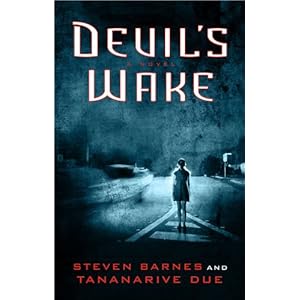
New York Times bestseller Steven Barnes has written more than twenty-five science fiction, fantasy, and horror novels. His “Stitch in Time” episode of “The Outer Limits” won an Emmy. The NAACP Image Award winner also has written for “The New Twilight Zone,” “StarGate,” Andromeda,” and “Ben 10.” He has been nominated for  written for Hugo, Nebula and Cable Ace Awards. In 2013, he and his wife, Tananarive Due, co-wrote and co-produced the short film “Danger Word,” based on their novel,Devil’s WakeHe and Due recently sold a cable TV adaptation–details soon!
Tananarive Due 
Tananarive Due, a member of the Writer’s Guild of America (WGA), has been named to the Grio100 and Ebony Power 100. The Essence bestseller and NAACP Image Award winner has also won an American Book Award for The Living Blood. She recently received a Lifetime Achievement Award in the Fine Arts from the Congressional Black Caucus. She is the former Cosby Chair in the Humanities at Spelman College. In addition to co-producing and co-writing the short film “Danger Word” with Steven Barnes, she currently has several book projects under option. She and Barnes recently sold a cable TV adaptation of one of her ovels–details soon! 
WANT TO ENROLL? CLICK HERE TO REGISTER NOW:  
You may also email us your questions at Tanacoach@gmail.com.

Sunday, May 12, 2013

My first short film: Danger Word -- TWO DAYS of fundraising left before the shoot!

UPDATED 5/21: Big news! After years of circling and being circled by Hollywood, my husband, Steven Barnes, and I have written our first short film, Danger Word, based on our characters from our YA post-apocalyptic novel Devil's Wake.  We're also co-producing it with director Luchina Fisher!  The shoot is scheduled Memorial Day weekend in the woods of upstate New York, starring veteran actor Frankie Faison ("The Wire," "Banshee," Coming to America).

With two days to go, we have more than 100 donors who have helped us get so close to our  preproduction goal of $15,000! Here's a video to tell you why we're making Danger Word independently, funded by fans, horror lovers and indie supporters.


The idea came up suddenly.  I'm the Cosby Chair in the Humanities at Spelman College, and in March I hosted an Octavia E. Butler Celebration of the Fantastic Arts that included a black science fiction film festival.  Seeing short pieces like Bree Newsome's Wake, Keith Josef Adkins' The Abandon and M. Asli Dukan's M.O.M.M. (based on Octavia E. Butler's Mind of My Mind) on the big screen reinforced the idea that I don't have to wait for money or a deal--I could make a short now.
Frankie Faison stars 

My infection with the independent spirit began sooner than that.  Last fall, my first guest at Spelman was Sundance winner Ava DuVernay, who appeared with lead actress Emayatzy Corinealdi and showed us a clip from her groundbreaking feature Middle of Nowhere.  During her talk, Ava reminded black writers and filmmakers to stop waiting for validation from Hollywood.

I'd had an example even closer to home.  One of my oldest friends, journalist and filmmaker Luchina Fisher, wrote, directed and produced her first short film in 2012, Death in the Family. (The film chronicles the untimely death of Luchina's mother when she was a teenager, and how her father's coping mechanism turned out to be devastating to his daughters.)

I have been concentrating most of my screenwriting time on a feature version of My Soul to Keep, which has been in and out of film development for years--but I suddenly realized I wanted to make a short film first.

This great post in the cinema blog Shadow and Act has an interview with me and Steve about why we decided to start small.

We also understand that cultural barriers often stand in the way of getting films produced. And that stereotypes like the Magical Negro, the Sacrificial Negro and the Spiritual Guide are pervasive in science fiction and horror films.  Steve and I discuss this frustrating phenomenon in our essay "Eulogy for the Sacrificial Negro."
Saoirse Scott (Kendra)

Bottom line: it was time to stop talking about making a movie and actually make a movie. Luchina funded her first film through Facebook alone, so we have a similar model with Phase I of our fundraising.  The crowdfunding phenomenon--of community funding, as we call it--is giving us a new voice.

From the cast to the crew, we're all taking part in this project for the pure joy of telling this story our way.

This is the story of a 13-year-old girl, Kendra, who has survived the zombie plague in her Grandpa Joe's wooded cabin--and how her birthday goes badly awry.  We're introducing a talented young actress, Saoirse Scott ("One Life to Live") as Kendra.

In this promo, watch Kendra's frantic Skype call to Grandpa Joe.  (This is NOT footage from the film.)


Please help us bring our dream of adapting our work to film a reality!  How can you help?

You can donate by clicking HERE--and learn about donor gifts, including DVDs and T-shirts.

Or, visit www.dangerwordfilm.com and learn more about this project.

Join the Danger Word Facebook page.

Follow Danger Word Film on Twitter: @ZombiesFreak.

Spread the word.  Tell your friends.  This is just the first step.  We can do it together!


Wednesday, January 23, 2013

Book excerpt: DOMINO FALLS (2/19) (sequel to DEVIL'S WAKE)


 Our young protagonists, including Kendra and Terry, are on a dangerous road trip in a school bus after Freak Day, when an infection causing rabies-like symptoms in humans swept the nation...and perhaps the world.  They are on their way to a settlement called Domino Falls, where they hope to find safety and shelter.  On the way, a man wearing a birthday hat has waved them down on the road.  Kendra waits in the bus while her friends investigate his home.
Since Freak Day, nothing is as it seems.
CLICK TO BUY NOW
                       ***** 
The wait outside seemed interminable.  The Christmas music changed to the Chipmunks singing about hula hoops, one of  Kendra's favorites when she was young.  The high-pitched revelry made her eyes sting with tears.   She and her mother and father had sucked helium from balloons and sung along to that song every year.  The sudden memory was so vivid that her knees went weak and the sky seemed to dim. 
After what seemed like forever, Ursulina and Dean came back out, trailed by the portly stranger.  Only the stranger was smiling.  He proudly held out a cake cutter he might have retrieved from the kitchen.
"Clear," Ursulina said.  "No one in the house.  Looks like the family's out back.  We saw them through the window."
"Kids?" Sonia said, anxious.
Ursulina nodded. 
"Just like I told you," the stranger said, and waved them all along the side of the house.  "Come on around.  They're waiting."
The little man bounced ahead of them to a back yard gate that lay open, waiting, walking light on the balls of his feet.  Happy happy, joy joy.  Could it be contagious? 
They followed him around to the back.   First they passed a play set that looked almost new:  swings and a small slide.  Next to that, a tree house with both wood-slat ladders nailed into a bare-limbed apricot tree, and a knotted rope that looked an inch and a half thick, now swaying in the breeze.   All of it looked like it might have been constructed since Freak Day.
Past the tree, Kendra finally saw the stranger's family.  Three of them sat at a large red cedar picnic table had been draped with a gaily-colored table cloth; two small girls  and a woman with frizzy yellow hair.  "One...two...three..." the girls were saying in piping unison, and dissolving into giggles.  "One...two...three..."
The others didn't see their approach because their backs were to them, all of them wearing identical birthday hats, oblivious to the world around them.  A small evergreen beside the table was strung with tinsel and candy canes, and topped with a silver star.   The table was piled with gaudily wrapped boxes and what looked like mailing tubes.
How had this family created an oasis when everything else was gone?  The girls were laughing and eating cake with their fingers, not waiting for their father to cut it. 
Kendra was close enough to Terry to hear him draw a startled breath.  "I don't know if I want to laugh or cry," he whispered to her.  Kendra wanted to do both.  Her hand sought his, their fingers twining together.  Everything seemed...so normal.   As if the devastation that had touched the rest of the world hadn't quite penetrated here.  
But not quite.  What was it?  Suddenly,  Kendra knew, and felt a chill:  Why were they celebrating outside the house?  The December air was cold, and only the father was wearing a jacket.  The others were barely dressed, practically in rags.   What the--
The sudden sound of Hipshot's urgent barking  made Kendra jump, startled.  The dog had followed them after all, standing between them and the picnic table.   
"I knew it..." Ursulina said, taking a step back.  If not for the tremor in her voice, she'd have sounded triumphant. 
Now that she was only twenty feet from the table, Kendra was close enough to see the cords wound around the family's feet. 
Dean swung his rifle up.  "What the hell is going on?"
"Just a party," the little man said, and when he turned, he seemed too bright, too happy.  Why hadn't they seen it?  "Every day, we have a party.  Can't wait for Christmas."
Their kids and the mother turned toward them, their private party disturbed.  Their eyes were reddish, their faces threaded with tiny vines, like rogue veins, growing where no veins should grow.  All three tried to lunge to their feet, but they were held in place by cables fastened to their waists.  They hissed and thrashed, but the girls made laughing sounds. 
"One...two...three..."  they said in unison, twins even now. 
The girls might have been pretty once, but no more.  Their round cheeks and matted blonde hair were ghoulish.  Kendra stood behind Terry, who had pulled out his Browning 9mm.   Sometimes, freaks could talk!  After the way she'd lost Grandpa Joe, Kendra didn't think she could ever forget it, but those girls had fooled her.  What if one of them had been too close? 
             Everyone who'd brought a gun had it trained on someone.  Terry's was on the stranger. 
"What do you want from us?" Terry said, raising his voice to be heard over Hipshot's ferocious growling and barking.  "Why'd you bring us back here?"
"The girls were born on Christmas Day," he said.  Now Kendra could hear his pain, grief, shock.  "We've always celebrated all month, so they wouldn't feel cheated.   Can you help me give them their present?   I know it's what they want."
Terry backed up a step, and Kendra gladly backed up with him.  Piranha cursed, and they formed an instinctive half-circle to protect themselves, ready to fire and flee.  His family was straining at the end of their ropes now, mouths stretched wide, yearning, fingers questing.
"What present?" Terry said, his voice unsteady.  "Man, you're crazy.  You can't help them.  Let us make sure you're not bit, and you can come with us.  Leave them here."
The man shook his head, insistent.  "I need you to help me give them their present," he said, and his voice broke.  "I can't do it.  Can't you see?  Look at them!  Listen to my girls laughing!  They sound exactly the same.  I want to, but...I can't."
Those might have been his sanest words yet, Kendra realized.  Her throat swelled with grief for a family she'd never known. 
"Let's get the hell out of here," Sonia said, tugging on Piranha.
But Piranha didn't move.  He was staring at Terry.  And Ursulina.  For the first time Kendra could remember, they didn't have a plan.  They didn't know what to do. 
"She's right," Kendra said.  "Let's go.  We shouldn't have stopped."
Terry shook his head, taking another step back.  "I'm sorry," he told the pleading man.  "We can't help you."  
But Kendra's eyes were drawn to Ursulina, who was gazing at the kids with curled lips and dead eyes.  Then Ursulina looked toward Dean, and their eyes locked with a spark of communication.  A pair of barely perceptible nods between them in an unspoken tongue that only they seemed to know. 
Ursulina, after all, had fought in a war when the barracks where they'd found her fell to an army of freaks.  And Dean's war had followed him to his dreams; the war he'd fought at home. 
"I can do it," Dean said. 
Ursalina nodded.  "Yeah.   We can do this." 
Dean looked at Darius, who shook his head.  All jokes were far from Darius's face.  "Not me, bro," Darius said.  "I'm going back to my bike."
"Go on," Dean said, nodding.  "You and the others wait for us."
"Sir?" Terry gently to the man.  "Step around front with us, please. You don't want to be here right now."
Kendra dared to hope that if she made it back to the bus fast enough and covered her ears, she could pretend she'd never seen the bizarre Christmas scene in the back yard.  But she never had the chance.
The stranger didn't come toward Terry.  Instead, he rushed to the picnic table, toward his wife and children, his arms wide to embrace them.  All Kendra saw was the ecstatic grin on his face.  "I'm sorry, Melissa," he said.  "I'm sorry, Caitlin and Cathy.  Merry Christmas, angels.  Happy birthday!"
For an instant, Kendra thought they were only trying to hug him too; they were all wrapped in an iron embrace, a tangle of frantic limbs. 
But Kendra closed her eyes when she saw their teeth. 
By the time the gunshots finally came from Ursulina and Dean, she had been praying for the sound of death.

© Copyright 2013 by Steven Barnes and Tananarive Due     
DOMINO FALLS (Atria) is the sequel to DEVIL'S WAKE (2012).  This zombie series is appropriate for adults and YA readers age 14 and older.  For a daily newsletter from the zombiesphere, "The Devil's Wake Survivors' Daily," follow @ZombiesFreak on Twitter.  You can also join the Devil's Wake Series page on Facebook. 
CLICK HERE TO BUY NOW

Saturday, September 15, 2012

Book excerpt: SOUTH BY SOUTHEAST: A Tennyson Hardwick Novel (Sept. 18th)


PROLOGUE 
      
ALL ACTORS DREAM of a meeting that will change our lives forever, but I didn’t dare hope that Gustavo Escobar would be mine.  Even my agent had no idea why Escobar had called me. Escobar was an Oscar-nominated director on a hot streak, and I was lucky to have a job playing a corrupt lawyer on one of the last surviving soap operas. 
After twenty years in the industry, I no longer believed in the Big Bang.  My microscopic part in a respected film set during the Harlem Renaissance, Lenox Avenue, hadn’t done much for my career.  And the last two Hollywood heavy hitters who had contacted me—both women—craved skills that had nothing to do with my acting.  Let’s just say I was wary of calls from powerful strangers. 
So when Escobar hadn’t shown up by nine o’clock for our eight-thirty dinner meeting, I was sorry I had agreed to meet him without more questions.  Once again, the joke was on me.
           But it was hard to nurse a bad mood inside La Habana.
La Habana was L.A.’s new ethnic restaurant du jour, modeled after a 1930s Cuban supper club.  That night, a full orchestra played a rousing rumba against colorful walls splashed with artificially aged murals of palm trees and revelers in old-fashioned Cuban dress.  Black-and-white footage of bandleaders Beny Moré and Aresenio Rodríguez flickered on overhead screens.  At least I would have an excuse to call my former girlfriend, April; I was glad for any new novelties to bring us together.
I was pulling out my phone to give my agent the bad news when a hand rested on my shoulder.  “Lo siento,” a man said.  “Sorry, I’m on Cuban Time.  Gus Escobar.”
I started to stand, but his firm hand on my shoulder told me not to bother.  Instead, Escobar sat across from me with a wide smile, sweeping off his white fedora. 
I was surprised to note from his short-trimmed graying hair that Escobar was probably in his fifties, long past the norm for an overnight success in Hollywood.  He had a slightly rounded midsection, but he carried himself fluidly, like a man who was fit and comfortable in his own skin.   His round, thick-frame black eyeglasses were prominent, more fashion than function.   His skin had only a whisper of a suntan, so I wouldn’t have guessed his Latino heritage if I hadn’t known.  His accent was as much Brooklyn as Havana.
“I lived in New York too long,” he said.  “I never get used to the traffic.”
“No problem,” I said with my trademark grin.  “Just glad to meet you, Mr. Escobar.”
“No, no, please, it’s Gus. You have to try the Bucanero beer.  They keep extras on ice for me.  Oye, Ramon!”  He signaled for the waiter with two fingers.   
Like a lot of Hollywood types, Escobar was broadcasting himself at full wattage, creating a character, but I liked him.  Rather than focusing on himself, he pulled his chair closer and gave me his attention as if I had summoned him. “You’re kind to make time for me on short notice,” he said.  “I’m such an admirer.  I saw Lenox Avenue, and you stole the scene.  But Sofia Maitlin and I are distant cousins, did you know?  She’s told me so many good things.  She said you’ve never gotten full credit, but you’re a hero.” 
Here it comes, I thought, my grin turning to concrete.  A year before, I’d helped an A-list actress save her adopted South African daughter from a kidnapping ring.  I’d forgotten that Maitlin shared Escobar’s Cuban lineage on her mother’s side.  I was sure Escobar was about to offer me a job as a bodyguard, and I wasn’t interested.
But I was wrong.  Escobar reached into his aged leather satchel and pulled out a script, which he nudged my way on the table.  The title showed through the plastic sleeve: Freaknik.
“For your eyes only,” Escobar said.  “I have a beautiful part for you.  We start shooting in Miami this fall.”  Then he waited for my response as if his livelihood depended on my answer. 
The floor seemed to shift beneath my feet.  I was glad the beer had arrived, because I needed a swig of moisture against my dry throat.   I didn’t want to look as shocked as I felt. 
“Good, no?” Escobar said, meaning the beer.
I wouldn’t know.  I hadn’t tasted anything.  My mind was still stuck on Escobar saying he had a part for me.
Three months before, Escobar had been featured on the cover of Entertainment Weekly during the Oscar campaign for his last film, Nuestro Tío Fidel, his arty biopic of Fidel Castro.  He had lost the Best Director Oscar to Martin Scorsese, but barely.  Len Shemin, my agent, had told me that his entire client list would kill to be in Gustavo Escobar’s next film.  
“Why me?”  Len would have kicked me under the table if he’d been there, but I asked.
Lenox Avenue,” he said.  “The fire in you.  I want that fire for Freaknik.”
I wanted to hear more, but a respected young actor passing our table—I won’t say who—did a Scooby-Doo double take when he saw Escobar.  He barely hid the who the hell are you glance he shot my way before he outstretched his hand to the director.  He gushed at Escobar like a college co-ed meeting the team quarterback.  Escobar was polite and patient while the actor angled for a meeting, but Escobar’s eyes frequently apologized to me for the intrusion.
"Thank you so much, but I..." Escobar began, hinting for privacy.
“Man, I’ve wanted to tell you…” the actor went on.  “I’m blown away by your human portrait of Fidel.  Our government talks shit about him, but you weren’t afraid to show the good he’s done.  You didn’t take the easy road.”
Escobar shrugged.  “Truth is in the eye of the beholder, but gracias.”
The actor excused himself reluctantly, his last gaze toward me full of burning envy.  I gave him a mock salute before he walked away.  Adios, asshole.
I’d watched Nuestro Tio Fidel to prepare for the meeting, but Fidel hadn’t seemed sympathetic to me in the film, which chronicled Fidel’s transformation from a young revolutionary to a frail, paranoid dictator.  Reviewers had compared Fidel’s depiction to Michael Corleone’s journey in The Godfather and The Godfather II.  From what I’d heard, the Cuban exile community in Miami had practically proclaimed Escobar a patron saint.
“Fidel’s good side?” I said.  “Was that what you were trying to show?”
            “No man is only one thing.”  Escobar winked, and I was sure he wasn’t talking about Fidel anymore. “The good and bad are always at war.”    
  My father often told me how his pastor could stare at any congregant and see his story.  That was how I felt sitting across from Escobar that night in La Habana, watching the glow of insight in his eyes.  If he’d talked to Sofia Maitlin about me, he had doubtless spoken to others.  He knew details about my history I’d tried to bury in a deep hole.  He seemed to know I was broken, afraid to dream, that I’d almost talked myself out of meeting him.  
He might even know I had killed a man.  Had Maitlin guessed and told him?
I wanted to say more.  To confide.  To confess.  To explain.     
Escobar nodded, as if I had spoken aloud.   He sighed, and tears suddenly shone in his eyes, erased when he blinked.  “Let me tell you something," he began.  “I lost everything and everyone as a boy.  People ask why I would follow Fidel with a horror movie.  I ask, why not?  Loss is one of the true universal experiences.  Our walking dead follow us.  They know us as their own.”
For the next two hours, while patrons came and went and the orchestra packed up its music, Escobar talked to me about his project.  Freaknik was a zombie movie only on the surface, he said.   “This film, at its heart, is about love and redemption in the face of unspeakable evil," Escobar said, tapping the script.  "The ultimate trial.  Like me, Tennyson, you’ve known trials.  That's why my vision won’t be complete without you.”
April and my father often said everything happens for a reason, but I never believed it until that moment.  My worst experiences had led me to the table with a stranger who was willing to help me build a future in Hollywood.  It wasn’t just the best night of my career; it was one of the best of my life. 
If only I had known what real horror would be waiting in Miami.
All of us are the walking dead.

South by Southeast on sale Sept. 18th.  PRE-ORDER NOW.
           Copyright © 2012 by Blair Underwood, Tananarive Due, and Steven Barnes

Monday, July 16, 2012

Book excerpt: DEVIL'S WAKE (July 31)


Thankfully, Longview's streets weren't stacked with cars and bodies.  Kendra drove past the industrial districts, those smokestacks that no longer belched white, the waterway now clogged with logs that, in saner days, would have gone to the Weyerhauser mill to build houses and make cardboard boxes.  Nothing moved.  Interstate 5 stayed mostly clear too.  Until she'd driven twelve miles down.
            There, just as the skies were growing dark, Kendra's headlights showcased an overturned truck that looked like an oil tanker blocking the road.  Kendra's heart danced with images of gas for life, until she realized it was only a milk truck. 
            Don't get greedy, girl.
            She slowed and decided the embankment was gentle enough to steer around the truck, amazed at how easily she'd adapted to the challenge.  Time was, she would have panicked at the blocked road, but she wasn't the same person she'd been yesterday.  Or even an hour ago.   Kendra pulled off, steering toward the dirt on the driver's side, her only clear passage. 
            Her tires had just left the asphalt when a man stepped out the shadows.  Kendra's eyes focused on him sharply, showing her every detail in her car's harsh light.  He was a big man, with dirty, pale, densely freckled skin.  A wild beard speckled white and black, with bits of yellow trapped inside.  When he grinned, his teeth looked like he'd scribbled on them with yellow crayon.   He'd been living outside.  His hands were behind his back as if she'd interrupted him while he was pacing, deep in thought.
            Or maybe, just maybe, he was a freak.
            Kendra remembered Grandpa Joe's warning never to stop for hitchhikers, and she and the stranger had nothing to talk about.  Without hesitating, she pressed her foot harder on the accelerator to make him think she would run him over rather than stop—and maybe she would.  She didn't know yet.
            That was when he whipped out his shotgun.  From four feet away, the barrel loomed as large and dark as a railroad tunnel.  He'd fire if she accelerated, and was too close to miss.  Heart thundering, Kendra rolled to a stop.  She felt her pulse drumming as her hands grasped the steering wheel, her heartbeat shaking her body. 
            Take your damned chances and drive over him!  Kendra's mind screamed.           
            But she didn't.  Instead, with her trembling hands raised high, she got out of the car.  She hoped she wouldn't lose more than the bicycle.  Maybe he wouldn't see her backpack. 
            "Heard the car from a mile off," the man said.  "Don't see too many cars no more.  And a pretty girl really ought not be out by herself.   Get out—and bring your stuff.  Everybody's got stuff."
            Kendra's legs barely obeyed her.   She didn't like the way he'd called her pretty.  She wished she looked dirtier, too.  But maybe he wouldn't hurt her if she did what he told her to do.  When she reached back into the car for her backpack, he gestured her over sideways, toward the ditch.        
            That was when she saw the freak.  
            The infected man had come down from the I-5, almost directly in line with the car, as if he were purposely concealing himself.  A narrow man in a piss-stained business suit, still wearing a tie askew.  It walked like most freaks, like it was having a slow-motion seizure.  This was an older one, his face scabbed red.  Grandpa Joe said the older, slower ones were slowly starving to death, and would do a lot more than take a single bite.
            Kendra moved around, backing away, so that the man with the gun was between her and the freak.  Had bad luck turned to good luck so soon?  The pirate's attention was on her, so he wasn't paying attention.  She just needed to keep his eyes occupied for another few seconds...
            She summoned a warm-up exercise from a long-forgotten acting class.   Kendra shimmied her hips slightly, as if she were about to do a private dance.  She saw the way the pirate's eyes widened, lips peeling back in a grin, exposing those nasty teeth again.
            "That's more like it, girl," he said, his breathing heavy.   "Show me the goods."
            Kendra slowly leaned over to rest her backpack on the ground, her eyes on the man with the gun.  His eyes roamed over her, and his lip as if she were a steak. 
            Over his shoulder, Kendra saw that the freak had halved the distance between them, within five yards, close enough for her to see how its eyes were foamed crimson with fungus.  Which of them horrified her more?
            The pirate still held the shotgun with one hand, but he tugged on his jeans to unsnap them with the other.
            That's it, you sick bastard.   Keep your eyes on me.
            But he must have heard something—or, more likely, smelled something.  He wheeled around just in time to meet the freak face to face.  Too late to run, barely time to scream.  The pirate managed to get off a single shot before the freak grabbed him, and it went so wild that Kendra ducked.  But not before she saw the freak's teeth tear into his exposed neck. 
            Kendra ran, and as she did saw that there were two more Freaks...one staggering in from the west, and one running from the north.  The runner was dressed like a fry cook, his apron tattered and blood-stained, his eyes filled with red veins.  A fast one! The older freak was a woman, thin now but her clothes were so loose that Kendra guessed that she had once been plus-sized.  Skin hung in diseased folds on her face, and her eyes were clotted red.  They were driving Kendra.  Funneling her toward a kill zone.
            They travel in packs.  They lay traps.  Even as she ran, Kendra struggled to comprehend.  
            No time to jump into the car or grab her backpack.  No time to do anything but flee.  She climbed up the side of the road, toward the rising bank of the I-5, the freak below her now, trying to claw toward her.   She heard a shot, and a scream from behind her.   The scream went on so long that its gurgling echo scarcely seemed human.     
            Kendra's world went gray, nearly white, as the fast freak’s hand clamped on her ankle, dragged her back down the incline a few feet while she kicked, expecting to feel the teeth pierce her skin at any moment.   Kendra screamed like an animal.   At last, a kick made contact.   The freak lost its death-grip and rolled away.  Kendra clambered up to the road and ran. 
            She was running so wildly that she nearly lost her balance, flailing her arms as she crossed I-5's eight lanes to disappear down the other side--the steeper side she hadn't been willing to chance with the car.   Panting hard, she ventured a peek.
            The thing appeared atop the far embankment and lurched like a drunk, trying to figure out which way she'd gone, and could not.  It lost focus and staggered north.          
            Sobbing, Kendra curled into a ball behind a pine tree.  She had lost everything.  One piece at a time her fragile world had been dismantled, the pieces ripped from her hands.   She had lost her backpack, her bicycle, her rifle, the car.  Her mother.  Her father.  Her grandpa.  Everything and everyone.  How had she been deluded enough to feel anything remotely resembling joy just yesterday?
            She'd been a fool to dream of living.
            Might as well just stay here, curl up in the dark.  Wait to die.        
            Then...she heard the engine.  Just a groan at first, something that might almost have been mistaken for wind in the trees.  Then a blue truck appeared on I-5...no, a bus.   Some kind of school bus, a wedge-shaped snow plow mounted on the front. 
            The bus slowed, pulled off along the road the way she had, its lights suddenly so bright that she could only see its hazy outline.  Kendra hadn't moved, was pinioned directly in its headlights. 
            Kendra felt no fear.  No curiosity.  In fact, nothing at all.   Exhaustion and   terror had congealed into a kind of quiet courage.    She only held up one arm to shield her eyes from the bright light.
            The bus stopped with a tremendous squeal of brakes, and a smell of burnt rubber.  The door opened, and she was able to look in past the stairwell to the driver's seat.  The bus driver was just a boy, only a year or two older than she was.  
            He wasn't dirty.  He didn't have a gun.  He had an angel's face with dark, curly hair and bright eyes.  Behind him, she saw others on the bus: a pale girl with long black hair with a single streak of white.  A narrow face, cradling a rifle in her sinewy arms.  One guy standing next to her, tall, thick-chested, darker than Kendra, a toothpick in the corner of his mouth and his lips curled in a lazy smile.  A dog stood at the top of the stairwell, some kind of Lab mix, eyeing her suspiciously. 
            The driver's eyes were wide, intelligent and kind.  So kind.
            They were, he was, the most beautiful sight Kendra had ever seen.
            He smiled at her.  "Need a ride?" 
           © 2012 by Steven Barnes and Tananarive Due.  Devil's Wake. Atria Books (July 31)

           *****

Library Journal on Devil's Wake:  "The husband-and wife writing team of [Steven] Barnes and [Tananarive] Due puts a fresh spin on the zombie plague motif by hinting at an extraterrestrial origin of the phenomenon.  Verdict: Gruesome but not overly graphic, this tale of young people struggling to remain human--and humane--in a post-apocalyptic near future features top-notch storytelling and believable characters." 

Monday, May 21, 2012

Devil's Wake (VIDEO trailer): bringing our "zombies" to life


           The first zombie movie I remember seeing was George A. Romero’s Dawn of the Dead, probably when I was in high school—and I was mesmerized by its iconic shopping mall gore and mayhem.  My mother raised me on the old Universal horror movies like The Wolfman, which were scary, but Dawn of the Dead was jaw-droppingly shocking.  I was hooked on zombies.  

Like millions of other television viewers, I’m looking forward to the new season of The Walking Dead on AMC—although the show’s premise is achingly similar to a television series my husband and collaborator Steven Barnes and I pitched years ago called Devil’s Wake.  

Our original concept was simple: life in a small town after an infection creates creatures very much like the walking dead.  We wanted to tackle issues like how to rebuild society once it breaks down, and how we create family after losing our loved ones.

Our pitch didn’t fly.  CBS was in the midst of developing a new show called Jericho, which was too similar to our concept, substituting a nuclear event for a zombie outbreak. 

Oh, well.  But Steve and I had published a short story set in the world of Devil’s Wake, “Danger Word,” in an anthology compiled by Brandon Massey called Dark Dreams—recently reprinted in Living Dead 2. We always intended to expand our concept into a novel. 

We got our chance with editor Malaika Adero at Atria Books, but with one change—instead of focusing on the adults, we wrote a YA/crossover novel with teenagers seeking safety on a disaster-ridden road trip in a rickety school bus.  Devil’s Wake is the first in a series of novels, fulfilling our dream of bringing our zombie world to life.  

Atria Books--July 31st 
Our novel never mentions the word “zombie,” but Booklist says we got it right:   “Zombie lovers won’t be able to put down Barnes’ [and Due’s] gripping yarn, which will leave them hungry for the next installment.”

Why do we love zombies so much?  Maybe it’s our fear of our inevitable mortality, or fear of chaos and war.  In the zombie culture, more than a few survivalists live as if they truly do believe the Zombie Apocalypse is only days away.

The Walking Dead won’t be back until the fall, but Devil’s Wake will be published July 31stUntil then, you can follow news from the zombiesphere with the “Devil’s Wake Survivors’ Daily” on Twitter—just follow @ZombiesFreak.  

Soon, I’ll post an excerpt from the book here.

For now, we have shot this book trailer to give you a taste and a tease.  

Here’s wishing you dark dreams.


Bestselling novelist Steven Barnes has been nominated for a Cable ACE award for his television writing on “The Outer Limits” and “The Twilight Zone.”  He has also written more than a dozen novels, including the award-winning alternate history Lion’s Blood.  He latest collaboration Larry Niven and Jerry Pournelle is the recently published e-book The Secret of Black Ship Island. Visit his website at www.diamondhour.com.   

Tananarive Due, an American Book Award winner, has been nominated for the Bram Stoker Award and International Horror Guild Award for My Soul to Keep and The Good House.  Her latest novel is My Soul to Take. Barnes and Due also co-author the award-winning Tennyson Hardwick mystery series in partnership with actor Blair Underwood.  Her website is at www.tananarivedue.com

Tuesday, May 11, 2010

Hollywood, meet Tennyson Hardwick... (NEW VIDEO TRAILER!)

     
     I first met Blair Underwood years ago through his efforts to mount a film version of a novel I sent him when I was a new writer.  My husband, Steven Barnes, and I have been collaborating on fiction and screenplays for a dozen years. 

    In 2007, the Tennyson Hardwick series was born as an answer to the lessons we have learned in Hollywood—Blair as an actor, storyteller, director and producer, and Steve and I as writers.  We wanted to create high-quality fiction with a cinematic sensibility, so readers couldn’t help imagining the movie version.

    Why three authors?  There’s power in numbers.
    
    We all bring different strengths and tastes.  And we all wanted our books to blur the line between books and film so that we wouldn’t be limited by budgets, delays or stereotypes.  We wanted strong characters, plenty of action, and memorable love scenes for our hero.

     The book titles riff off of classic Hollywood movies. Plots are ripped from the celebrity headlines.  The hero, Tennyson Hardwick, is an actor who moonlights as a bodyguard and detective, and his past as a gigolo to powerful women comes back to haunt him in unexpected ways.

     The first novel, Casanegra., was an Essence Book Club pick.  The second novel, In the Night of the Heat, won an NAACP Image Award.   

     The newest novel, From Cape Town with Love (Atria Books), will be published May 18 in hardcover—but on a new platform called a Vook on May 20.  Vooks, which are video e-books, are the perfect home for Tennyson Hardwick.  This time around, we wanted a James Bond flair.  
  
With Vooks, readers read an abridged version of the novel on their computers, iPhones or iPads.  (To find out more about the process of creating a Vook, visit www.tananarivedue.wordpress.com.)

       What does it really look like when publishing meets Hollywood?

       We think it looks something like this.

  
     CLICK HERE TO SEE THE VIDEO ON YOUTUBE!!! 


      From Cape Town with Love Vook (abridged) with video clips available at Vook.com, Simonandschuster.com and iTunes on May 20. 

       Original hardcover available in bookstores everywhere May 18. 


       ORDER YOUR COPY OF THE UNABRIDGED NOVEL NOW  


      READ AN EXCERPT: FROM CAPE TOWN WITH LOVE.


  BELOW:  A discussion featuring Blair Underwood, Tananarive Due and Steven Barnes as they discuss the Tennyson Hardwick series. 


Friday, February 12, 2010

EXCLUSIVE book excerpt: FROM CAPE TOWN WITH LOVE (May 18, 2010/Atria)

I can't believe it, but in May we'll be publishing our third novel in our Tennyson Hardwick mystery series, From Cape Town with Love. These are the books I'm co-authoring with my husband, Steven Barnes, in partnership with actor Blair Underwood.

This book literally begins where 2008's NAACP Image Award-winning In the Night of the Heat left off, so there's plenty of time to catch up...but all of these books are written so that first-time readers can follow them too!

Before we post the excerpt, here's what other writers are saying about From Cape Town with Love:

****

"Bold, sexy and engaging, From Cape Town with Love is an amazing novel penned by extremely talented storytellers! Tennyson Hardwick continues to be one of the most superb characters in contemporary literature."

--Zane, New York Times bestselling author of Total Eclipse of the Heart, executive producer and screenwriter, Cinemax Original Series "Zane's Sex Chronicles."

****

"I've been a fan of the Tennyson Hardwick series since Casanegra--and Ten is back and better than ever. From Cape Town with Love has something for everyone: the trademark sex and sizzle, and a nod to James Bond that makes this a high-octane thrill ride. Underwood, Barnes and Due don't disappoint. If you like great fiction penned by superb writers and brilliant storytellers, get onboard!"

--Eric Jerome Dickey, New York Times bestselling author of Resurrecting Midnight and Dying for Revenge.

****
"Heart-stopping and crazy sexy, From Cape Town with Love will keep your pulse pounding through the night. Tennyson Hardwick is a hero for the 21st Century. Easy Rawlins, say hello to James Bond!"

--Paul Levine, author of Illegal

****

Here's your sneak peek!

FROM CAPE TOWN WITH LOVE

Prologue


They called themselves the Three R's: R.J., Ramirez and Reiter. Reiter was female, but not exactly the nurturing kind. I was sitting at a table in a cold, windowless room, in the worst pain in my life. I'd been in the same chair for hours.
Sitting upright wasn't easy because of the pain.
R.J. stood over me with a folder. He did most of the talking.
"The FBI is writing a book on you as we speak,” R.J. said. “Usually that’s the bad news. But in your case, that’s the good news.”
I couldn’t resist. “Then what’s the bad news?”
“You seen that TV show…? What’s the name?” R.J. asked Ramirez and Reiter.
“What show?” Reiter said.
At first, I thought he was talking about my old series, Homeland. I’d played an FBI agent working with the Department of Homeland Security. But I was as wrong as I could be.
R.J. snapped his fingers. “Without a Trace,” he said. “It’s about people who’ve disappeared, right? One day they’re here, bam, they’re gone. That’s a fascinating show.”
There was wildness in his eyes.
“You ever heard of the Patriot Act?” R.J. asked me.
I suddenly realized how hungry I was. I wondered again if it was day or night.
“That’s got nothing to do with me,” I said. I wanted to force him to say what he was hinting at. “I’m not a terrorist.”
“But you’re an interesting guy,” R.J. said.
“Fascinating guy,” Ramirez agreed in a sing-song.
R.J. went on. “And if we decide we want to talk to you for a while, get to know you better, we can keep you around as long as we need to.”
“But nobody wants that,” R.J. said.
“Pain in the ass,” Reiter said.
Cold, steel reality unfolded in my head: I was in an interrogation room in an unknown location. My body felt butchered. I had been promised a long stretch in prison. I had just lost my oldest friend. I had barely survived the night, and a man had died at my hands.
No. Why mince words? I had killed a man. For the first time in my life.
I wondered how many people R.J., Ramirez and Reiter had killed between them, or what measures they were willing to take when they wanted information. I didn’t get along with most cops already—but they weren’t cops, or anything like it.
I wished they were. I understood the rules with cops. There were no rules at all now.
****
ONE
Seven months earlier
November 5, 2008

South Africa

April Forrest's eyes widened. “Ten…what happened to your face?”
In the bosom of beauty, ugly comes as a shock. The swelling and bruises across my face made me look like I’d just been attacked by a prison gang. Might as well have been—although it was just one man. In the swamp.
When April left Los Angeles to teach in South Africa for six months, she’d left me too. We had passed the one-year milestone right before she changed her mind about us, and an ocean and ten thousand miles had suddenly seemed like a small toll to see her again. I wanted to know what had scared her off—but maybe it was written all over my face.
“Long story,” I said. “I tried, but I couldn’t find flowers this late. May I come in?”
Apparently, long story wasn’t enough to get the door open any wider. April was lithe and fine, with skin the color of ginger.
She was living in a tiny cinderblock house on a street of modest but well-kept homes in a middle-class section of Soweto, outside of Johannesburg. In the bright light from the porch, I saw her jaw shift with uncertainty. Her delicate chin and gently swaying braids, adorned with regal white beads at the ends, reminded me why some men could be driven to beg.
Two or three loose dogs I’d seen outside of the gate were barking at me from the unlighted street. Two yipped harmlessly, but one sounded like thunder. A week before, I’d killed a German shepherd in the Florida swamp. The memory of the dog’s last yelp, and his master's last labored breath, still iced my blood.
“You look like you almost got murdered, Ten. What happened?”
“The T.D. Jackson case.” My investigation into the death of football star T.D. Jackson had taken me places that were hard to put into words. Dad had told me that an LAPD officer who had been through my ordeal might have been considered like an OIS, Officer Involved Shooting, and sent to counseling. “Like I said, April… long story.”
April’s look told me that I was failing my first test since our breakup. In her place, I might close the door on me. Dying hope flashed hot in my chest. I knew it, then: I shouldn’t have come to see April without calling her first, like my father and Chela told me before I left.
“Ten, I can’t…I’m not alone.”
She’s already with somebody else? A foreign rage tightened the back of my neck. I didn’t know if was more pissed at her for moving on, or at me for flying across the world to witness her new life up close.
When an older woman appeared behind April in the doorway, I wanted to hug her. April was boarding, so she was living with her hostess! The woman looked about fifty-five, but her skin was so smooth that she might have been ten or fifteen years older. Bright silver hair framed her forehead beneath her colorful head scarf. The slope of her nose and sharp cheekbones reminded me of Alice. Beauty, timeless. Another woman. A different time. Despite the severity of her frown. the stranger’s face forced me to stare.
“I’m sorry it’s so late, Mrs. Kunene,” April apologized. A faint living room light was on, but the woman might have been asleep. It was ten p.m. in Johannesburg; late for an unannounced visitor. I hadn’t thought about the hour when I jumped into the taxi at the airport and told the driver to go to the address April had given me. A lot had changed since the last time I was in South Africa.
The streets were so dark, I had no idea how the driver found his way.
“This is my friend, Tennyson. From the U.S.”
April said friend as if it was the whole story. I could barely smile for the hostess—not that a smile would have helped my face. Mrs. Kunene looked like she was trying to decide if she should call the police right then, or wait for me to look at her the wrong way.
After a twenty-two-hour flight via Amsterdam, I couldn’t fake pleasantries with a hostile stranger. “Come away with me for a long weekend,” I said to April's ear, not quite a whisper. I’d planned a more elegant approach, but the sight of April’s face had drained my memory. My palms were damp, like my virgin friends used to say in high school.
April touched her ear, coaxing away a strand of hair. “Ten…slow down…”
A broad-shouldered man with snowy white hair appeared next, wearing only his slacks, roused from bed. Mr. Kunene might be my father's age, but his motion was agile and his face was as smooth as his wife's.
“April, this man is your friend?" he said. "He looks like a tsotsi!”
I admired his lyrical accent despite the insult: He'd just said I looked like a gangster.
April planted her foot in the doorway to keep the door from slamming in my face. Her foot was as firm as her voice was gentle: “Yes, yes, he’s a good friend. It’s all right.”
“Is he drunk?” Mrs. Kunene called, stepping back. The rolled R’s in the woman’s accent were music. She made drunk sound like a state to aspire to.
“Sir and madam, I am not drunk,” I said. “Please accept my apologies for stopping by so late. I have to talk to April right away.” When they heard my reasonableness, and my American accent, some of the alarm left their eyes.
I pointed out the gate, where the tattered taxi that had brought me waited—a dingy gray VW Citi Golf that had once been white. One of the back tail lights was missing, and the other glowed dimly. The driver sat inside, awaiting my verdict. The yipping dogs still barked, but the larger one had moved on. April saw the taxi and realized delays were costing me.
“I’ll be right here on the porch,” April said to her hosts, and slipped outside before they could object. The white curtains fluttered at the window as they watched us.
On the porch, I had an impulse to pull April close—but I followed her lead and kept a two-foot distance. If I tried to touch her and she flinched away, no words would rescue us.
“Sorry, but she’s a minister,” April explained, hushed. “They're strict with boarders.”
Good. I hoped they ran the house like a damn nunnery. “I need a face-to-face conversation with you,” I said.
April’s eyes fell away, and my throat burned. A month ago, April would have fussed over my bruises, planting her soft lips on mine.
“Let me take you somewhere beautiful,” I said. “Don’t we deserve time, April?”
“Yes, but…I’m working until Saturday.”
“Make up an excuse.”
“Lying comes easier to some people, Ten.” No irony or malice; just a fact. And she was right. If I’m not careful, lying is my nature.
“Then meet me for coffee tomorrow.” The exhaustion shredding my voice must have sounded like desperation, but I hadn’t had a good night’s sleep in a week. “Tell me when you have a break, and I’ll come pick you up.”
Silence again. I’d envisioned myself staying with April—yeah, right—so I didn’t have a reservation at a hotel. Another hassle waited, and the day was already ending on a sour note.
My driver, Sipho, was watching me through his open driver’s side window, eager to see me give him our signal: thumbs up if he could drive away, thumbs down if he should wait.
When I gave Sipho the thumbs-down, I heard him click his teeth with disgust. “Eish! No woman wants the nice guy!” he called from his window, repeating his mantra from our ride.
When I’d told Sipho the story of how April left the States to teach and then broke up with me by telephone, he’d let out a shout as if she’d shot me. A rich man like you, treated this way by a woman! Maybe he was merely angling for a tip, but he was my only friend that night.
I was getting mad, and so far anger had nothing to do with April and me. I hoped I wouldn’t have to scorch April in those flames. Neither of us would salvage anything from that.
“April, if you’re through with me, help me wrap my head around it.”
April touched my forehead, just above a bruise, and her touch extinguished my anger. “Where would we go?” she said. “If I get the days off.”
I stepped toward April and cradled her cheeks with my palms. Her chin sank against the heels of my hands. For a precious few seconds, she trusted me to hold her up.
I did not try to kiss her. Holding her face was enough.
“I know the perfect place,” I said.
Cape Town might be our last chance.
Copyright © 2010 by Trabajando, Inc., Tananarive Due and Steven Barnes